The short answer
Custom blinds and shades are priced for the specific window and selected product. The biggest cost drivers are treatment type, dimensions, material, operating system, motorization, specialty shapes, installation access, and quantity. A measured in-home consultation is the reliable way to turn those variables into a project quote.
What to know before you choose
- Custom pricing is based on the actual opening and selected treatment
- Product type, material, size, controls, and installation drive the budget
- Prioritizing rooms can create a practical phased plan
- Professional measuring helps prevent expensive sizing and clearance mistakes
The honest answer
A window count alone is not enough to price the project.
Two homes with the same number of windows can have very different projects. One may use straightforward faux wood blinds on standard openings. Another may include tall cellular shades, a wide patio treatment, room-darkening bedroom shades, and motorization. The number of windows is only the starting point.
Online price ranges often leave out the details that determine the final fit: exact dimensions, mounting depth, obstructions, fabric grade, control system, specialty hardware, freight, and installation. That is why Eclipse begins by seeing and measuring the windows.
Cost drivers
Seven choices shape the final quote.
- Treatment type: blinds, roller, cellular, roman, zebra, drapery, or specialty solutions
- Window dimensions: width, height, depth, and unusually large openings
- Material and fabric: composition, texture, opacity, color, and collection
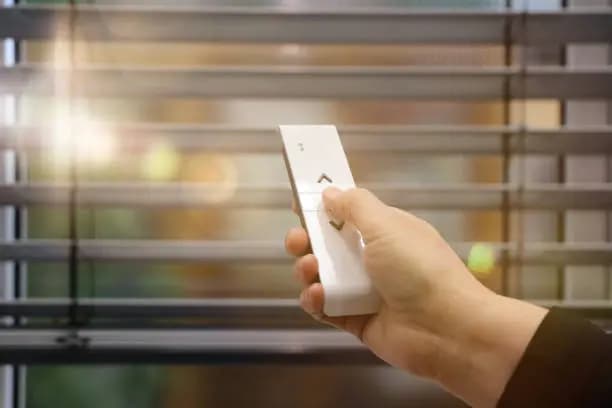
- Operation: cordless manual lift, specialty controls, or motorization
- Mounting conditions: inside versus outside mount and available clearance
- Installation access: height, furniture, stairways, and structural conditions
- Project quantity: the number of treatments and how rooms are phased
Product choices
Different treatment categories solve different problems.
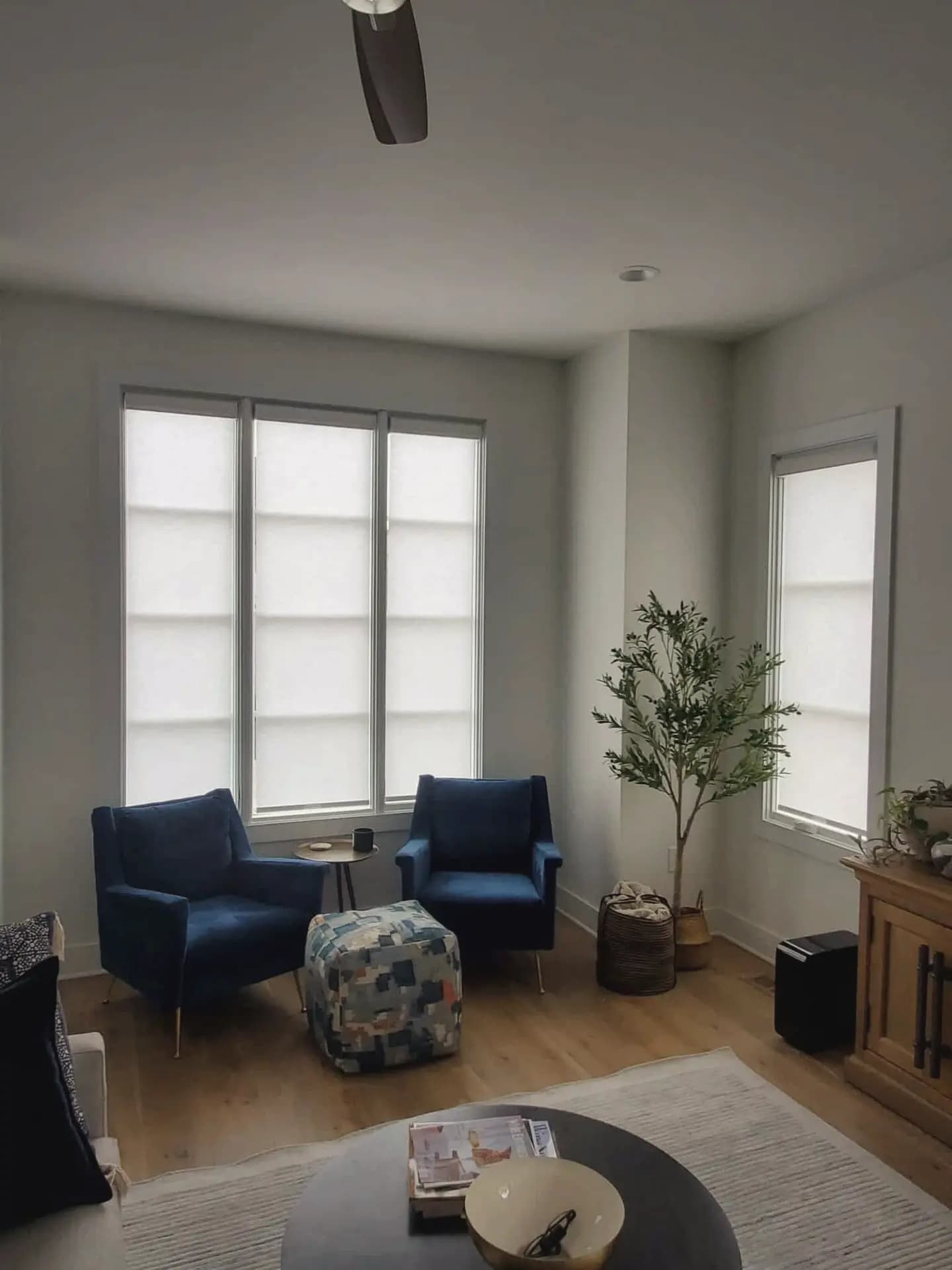
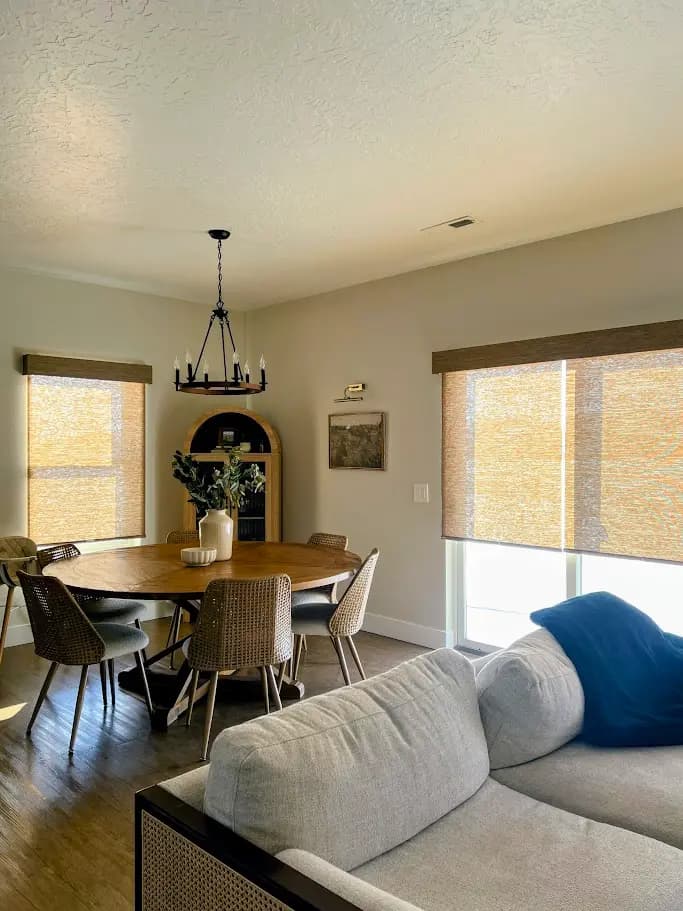
Faux wood blinds are a practical choice when tilt control, durability, and a familiar look matter. Roller shades can stay visually simple or become a fabric feature. Cellular shades add an insulating structure. Roman shades and drapery bring more textile, tailoring, and decorative detail. Zebra shades balance view-through light and privacy. Motorization can be added where compatible and valuable.
Rather than ranking every category from cheap to expensive, compare what each one solves. A treatment that addresses glare, privacy, comfort, operation, and appearance may deliver more value than a lower-cost option that handles only one of those needs.
Budget planning
How to control the budget without compromising the whole project.
Tell Eclipse the working budget and the rooms that matter most. A useful consultation should narrow choices, not pressure you toward the most expensive option. If the whole home is not practical at once, a phased plan can still keep color, style, and hardware coordinated.
- Prioritize rooms with privacy, glare, sleep, or temperature problems
- Use motorization where reach or daily use makes it meaningful
- Coordinate a mix of products instead of forcing one premium choice everywhere
- Phase the project by floor, room type, or urgency
- Choose durable materials for moisture-prone and high-use spaces
- Decide where decorative fabric matters most and where a simpler treatment works
The Eclipse process
What happens before you receive a quote?
Eclipse meets you in the space, looks at the direction of light and privacy needs, measures the openings, and brings material options into the room. That makes it possible to compare colors against the actual walls, floors, furnishings, and daylight.
Once the product, material, controls, and installation details are clear, Eclipse can prepare a project-specific quote. The goal is a number connected to a real plan—not a teaser price that changes once the important details appear.
Frequently asked
Questions homeowners ask before deciding
Can Eclipse quote one room at a time?
Yes. Starting with the highest-priority room can be a practical way to understand options and plan later phases while keeping the home coordinated.
Does motorization increase the price?
Yes. Motorization adds the motor, power source, controls, setup, and compatible product components. The total depends on the treatment and control system selected.
Why does professional measuring matter?
Custom treatments are built to submitted dimensions. Accurate measuring also accounts for depth, trim, handles, cranks, and mounting conditions that can affect operation and fit.
Can I get an exact price online?
An exact custom quote requires window dimensions and product selections. Eclipse offers a free consultation so the estimate reflects the actual openings and project.
See the options in your room
A better answer starts at the window.
Eclipse brings product samples to your Great Falls home, measures the openings, and helps compare the choices in the light where they will actually live.